Español
What is the Fermentis Superior Yeast project?
In 2024, we made a significant investment at Algist Bruggeman, one of our major yeast factories located in Ghent, Belgium. In a nutshell, the goal of this project was to improve the quality of the brewing yeast produced there.
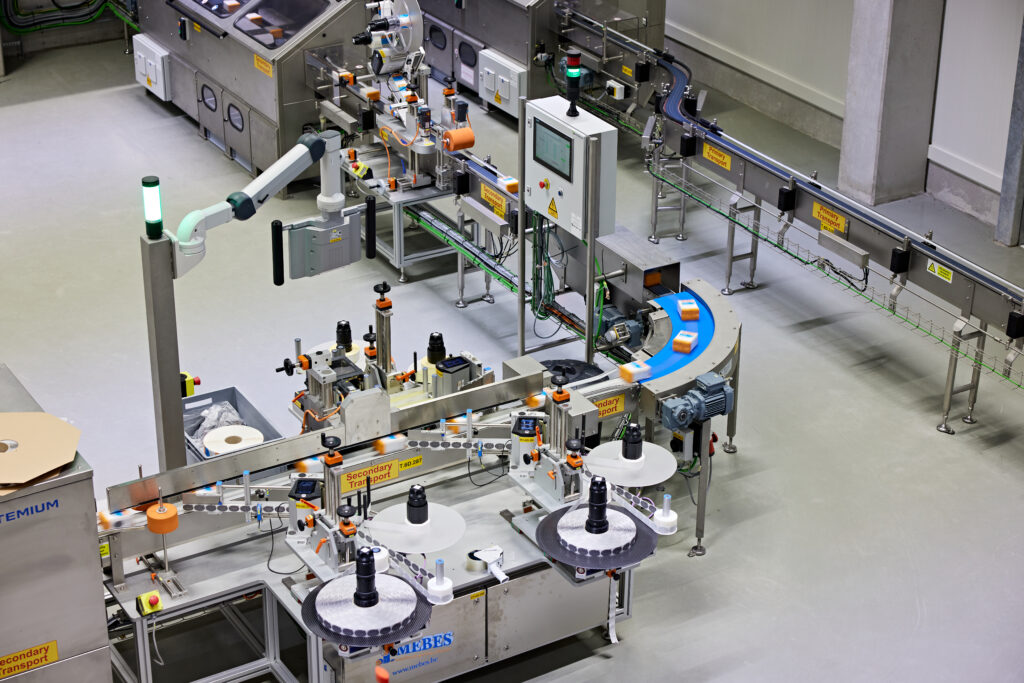
The project is entirely dedicated to brewer’s yeast in the dry phase, which is where there is the highest risk of foreign bodies coming in. Our new facilities allow us to isolate production lines, close them and clean them differently. We designed and installed a state-of-the-art system that allows us to manage the packaging lines in a unique way. As a result of this investment, we have significantly reduced the possibility of foreign cells contaminating our brewing yeast.
Why was this investment made at Algist Bruggeman?
One of our main production plants, Algist Bruggeman produces and packages the majority of our brewing yeast. There are two phases when producing active dry yeast: the wet phase and the dry phase. The wet phase has been extremely well managed and controlled for a long time. Lesaffre has been a specialist in this phase for 50-60 years now. We’ve mastered the liquid and dehydration phase extremely well, and microbiologically it’s very stable.
The dry phase is fundamentally different. In the wet or liquid phase, you have a very low risk of inputs because everything is isolated and hermetically sealed. Once the yeast is dehydrated, the risk of contamination increases. This is because foreign bodies can be present in the air or trapped in the machinery.
For this reason, we designed a brand-new processing line for our dry yeast. We’ve completely isolated this whole second phase – it’s hermetically sealed and frequently cleaned in a rather special way. The quality of the dry yeast that comes in the bag is now of a new industry standard. For me, it’s a really exciting innovation.
How do you measure this achievement on quality improvement?
When we talk about quality or purity, we measure the contamination rate by the number of foreign yeast cells present in a product. The industry standard is 100,000 to 1 million foreign yeast cells per 10 billion. At Fermentis, we have been improving our packaging and processes to bring it down to between 100 and 1,000 foreign yeast cells per 10 billion. This reduction is huge, it’s gigantic. As a result, we have achieved a contamination rate that is much lower than the industry standard. This means we’re making brewing yeast that’s more reliable, with which brewers can better manage any risks associated with contamination.
We’re very proud of this achievement. It was a big investment, and it’s paid off. Our new facilities at Algist Bruggeman and our new packaging is designed in such a way as to protect the quality of our yeast from start to finish – from production to packaging to pitching.
Tell us more about the changes in Fermentis packaging.
The second big upgrade of our new packaging line at Algist Bruggeman is a state-of-the-art labeling and marking system. To my knowledge, there are no other yeast producers today that can do this kind of labeling.
The brewer’s yeast we produce at Algist Bruggeman is exported all over the world. The challenge this presents is that not all countries have the same regulatory constraints on imports in terms of labeling and marking. You’re also dealing with different languages, typefaces and characters, and you’re required to produce labels with certain information which differs from country to country.
To solve this problem, we’ve built a new line that can produce what we call ‘make to order’ labels. In the past, we’ve always done ‘make to stock’, and we’ll continue to do so, but ‘make to order’ gives us much more flexibility to better service our customers and distributors around the globe. It helps to ensure products can be delivered on time and in the best condition. Everything is digitalized and automated, so each label will be customized and fit for purpose. Our temporary storage warehouse is fully automated and also quite unique. In the entire yeast industry, I think it’s the only one of its kind in the world.
We’ve also updated our primary label and added a QR code to each individual packet of yeast. Our front label is now a booklet, so users can peel back the labels to find their preferred language. The unique QR codes means each pack can be identified and traced. This allows us to automate our temporary storage system, and gives users access to product information such as the batch number, production date and location.
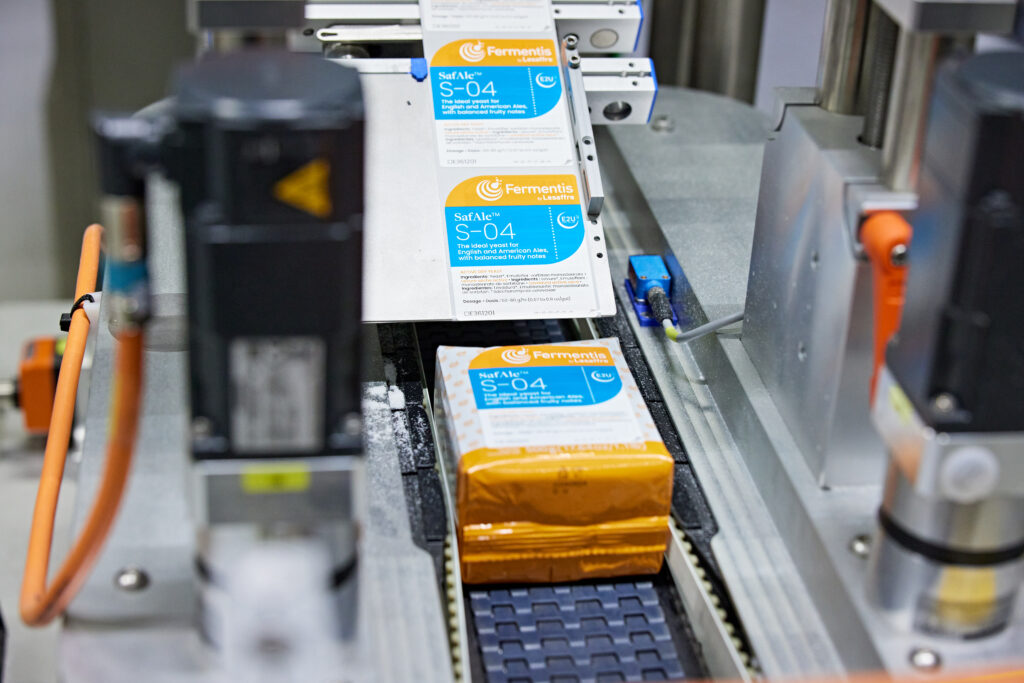
The updated packaging also has a new ‘Easy To Open’ label. Can you explain ‘Easy To Open’ in more detail?
The third and final dimension of this project is the updated design of our beer yeast bricks. We have implemented an innovative new way for brewers to pitch our yeast which further reduces any chance of contamination.
Five hundred gram and 2.5-kilogram packets of brewing yeast produced at Algist Bruggeman will now have a special Easy-To-Open label. We have designed and will distribute a unique piercing tool which allows brewers to open the bag and pitch the yeast in a very clean and controlled way. The Easy-To-Open label covers an adhesive sticker. When you remove this label and pierce the bag, the tool adheres to the sticker and works as a funnel, allowing the brewer to inverse the bag and pitch the yeast directly into the fermentation vessel. This method minimizes any losses and contamination, which is the key advantage of the new design.
Has the Fermentis Superior Yeast project lived up to your expectations?
I’m very happy to say that yes, it has – and it’s a big achievement. The project was created to improve the quality of our yeast. It was really a matter of improving quality through upgraded packaging. And now, we have an intrinsic product quality that goes up a huge notch.
Thanks to these developments, we’re not only ensuring that the yeast produced and packaged at Algist Bruggeman is as pure as possible, but we’re also providing an innovative way for brewers to pitch their yeast to reduce any cross contamination when brewing. It’s really about ensuring quality from the moment our yeast is produced, to the moment it’s put to work for the end-user.