English
 Français
 简体中文
简体中文 Español
 Português

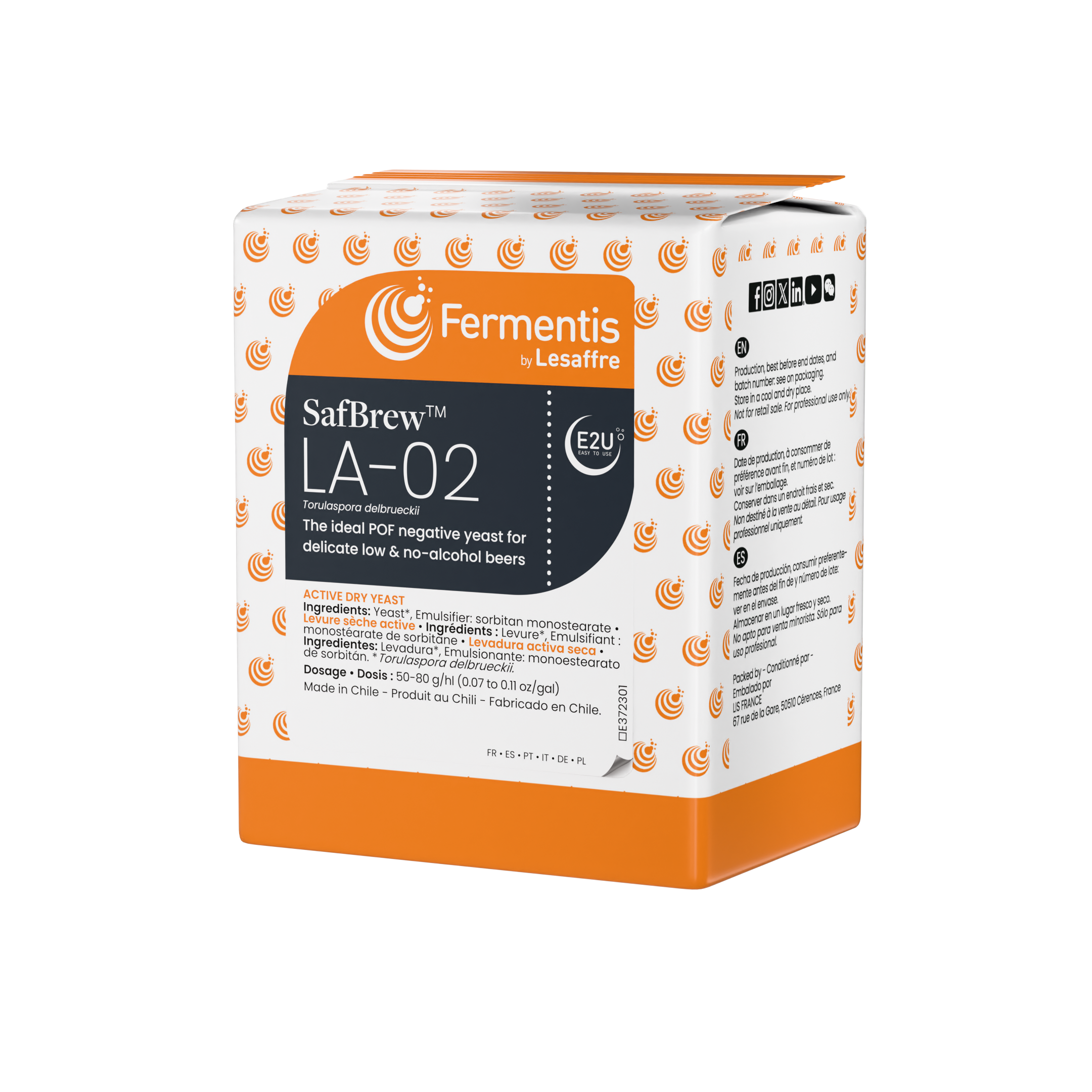
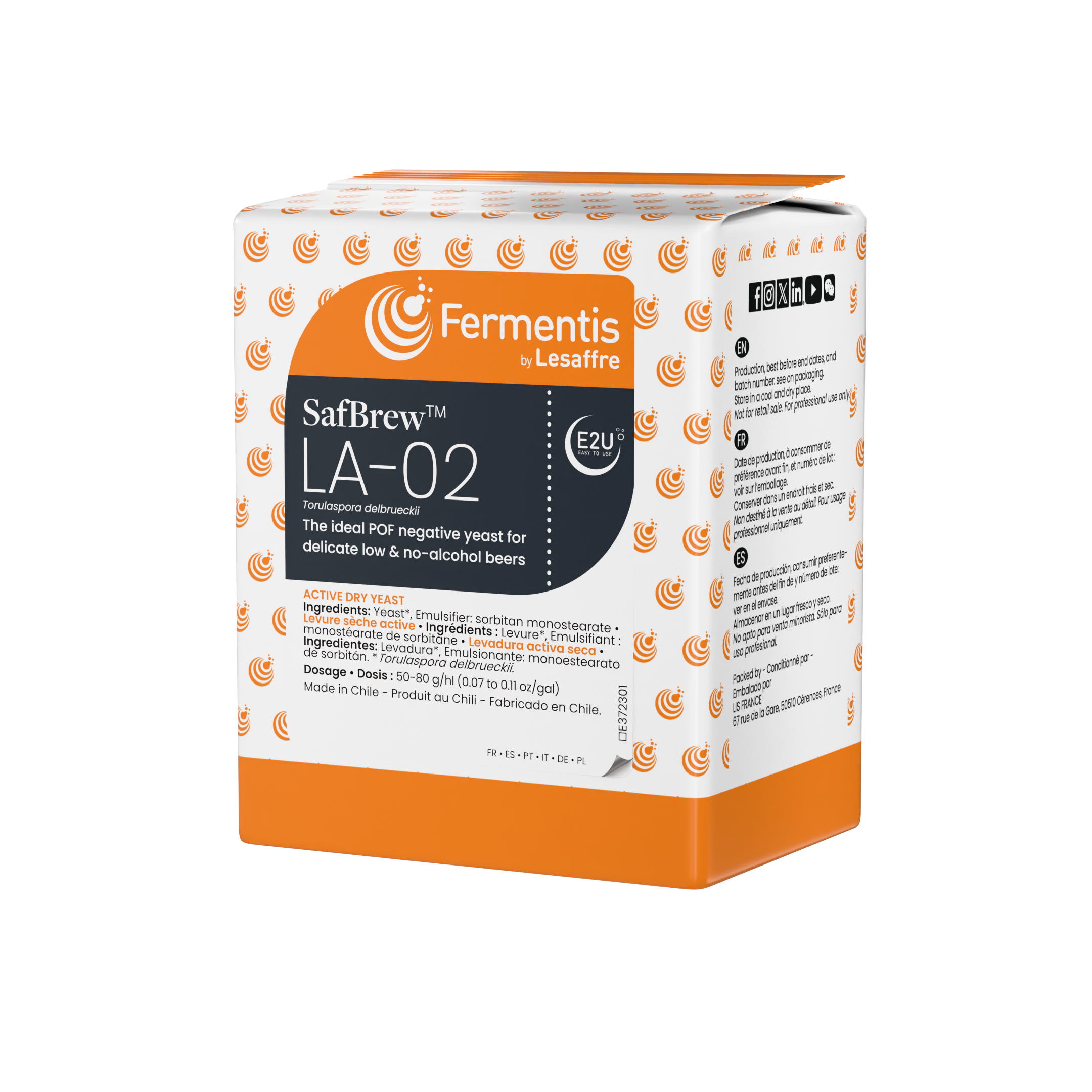









Il lievito POF negativo ideale per eleganti birre analcoliche o a basso contenuto alcolico.
SafBrew™ LA-02 (Torulaspora delbrueckii) è il primo lievito non-Saccharomyces selezionato da Fermentis specificamente per la produzione di birre analcoliche e/o a bassa gradazione (<0,5 % vol.). Questo lievito assimila principalmente gli zuccheri semplici (glucosio e fruttosio) e assimilerà gradualmente il saccarosio. Questo ceppo di lievito non assimila il maltosio, né il maltotriosio né le destrine.
Dopo la fermentazione, questo ceppo presenta caratteristiche fermentative da neutre a medie, senza note fenoliche (speziate). I profili sensoriali possono variare a seconda della composizione del mosto e delle condizioni di fermentazione.
Ingredienti: Lievito (Torulaspora delbrueckii POF-), emulsionante: monostearato di sorbitano (E/INS 491).
Panoramica - SafBrew™ LA-02
Estere
totali
Totale alcoli superiori
Attenuazione apparente
Tempo di sedimentazione
Flocculazione del lievito
Caratteristiche tecniche - SafBrew™ LA-02
Dosaggio / Temperatura
Da 50 a 80 g/hl nella fermentazione primaria, idealmente a 20°-25°C
Utilizzo
Il savoir-faire di Lesaffre e il continuo miglioramento del processo produttivo del lievito consentono di ottenere una qualità eccezionale di lieviti secchi in grado di resistere ad un'ampia gamma di utilizzi, compresa la reidratazione a freddo o l'inoculo diretto, senza compromettere la vitalità, il profilo cinetico e/o analitico dei lieviti. I birrai possono scegliere le condizioni di utilizzo più adatte alle loro esigenze:
① Inoculo diretto:

Inoculare il lievito direttamente nel serbatoio di fermentazione alla superficie del mosto ad una temperatura pari o superiore a quella di fermentazione. Disperdere delicatamente il lievito secco assicurandosi che il lievito ricopra tutta la superficie del mosto per evitare la formazione di grumi. Idealmente, il lievito viene aggiunto durante la prima parte del riempimento del fermentatore; in questo caso la reidratazione può avvenire ad una temperatura di mosto superiore a quella di fermentazione, il fermentatore sarà poi riempito con mosto ad temperatura inferiore per portare l'intera massa di mosto alla temperatura di fermentazione.
② Previa reidratazione:
Oppure, disperdere il lievito in un minimo di 10 volte il suo peso di acqua sterile o mosto bollito e luppolato a 15° – 30°C. Lasciare riposare da 15 a 30 minuti, quindi mescolare delicatamente e introdurre la crema ottenuta nel recipiente di fermentazione.
-
- Viable yeast > 1.0 *1010cfu/g
- Purity : > 99.9 %
- Lactic acid bacteria: < 1 cfu /107 yeast cell
- Acetic acid bacteria: < 1 cfu /107 yeast cell
- Pediococcus: < 1 cfu /107 yeast cell
- Total Bacteria: < 5 cfu /107 yeast cell
- Pathogenic micro-organisms: in accordance with regulation
*Analysis done according to our HACCP study
Conservazione
Per massimo 6 mesi: il prodotto deve essere conservato ad una temperatura inferiore a 10°C.
In caso di conservazione per oltre 6 mesi: il prodotto deve essere conservato ad una temperatura di circa 4°C.
Per un breve periodo (non superiore a 7 giorni), si può conservare a temperatura ambiente, idealmente non superiore a 30°C.
Durata di conservazione
24 mesi dalla data di produzione. Fare riferimento alla data limite di utilizzo ottimale riportata sulla confezione. Le confezioni aperte devono essere ermeticamente sigillate, conservate a 4°C e utilizzate entro 5 giorni dall'apertura. Non utilizzare le confezioni che hanno perso il sottovuoto.
Ogni lievito Fermentis è sviluppato secondo uno specifico schema di produzione e si avvale del savoir-faire del Gruppo Lesaffre, leader mondiale nella produzione di lieviti. Ciò garantisce la massima purezza microbiologica e la massima attività di fermentazione.
I lieviti secchi per birra Fermentis sono noti per la loro capacità a produrre una grande varietà di stili di birra. Per confrontare i nostri ceppi, abbiamo effettuato prove di fermentazione in laboratorio con un mosto standard e condizioni di temperatura standard (20°C).
Dato l'impatto del lievito sulla qualità della birra finale, raccomandiamo di seguire le istruzioni di fermentazione prescritte. Consigliamo vivamente agli utenti di effettuare prove di fermentazione prima di qualsiasi utilizzo commerciale dei nostri prodotti.
DA NOTARE!
- La birra fermentata con lievito maltosio-negativo (come SafBrew™ LA-02) tratterrà naturalmente zuccheri residui fermentescibili. Pertanto, si raccomanda vivamente di effettuare immediatamente un cold crash appena sarà raggiunta la densità finale auspicata. La concentrazione tipica di glucosio/zuccheri semplici di un mosto 100% malto si aggira intorno al 10%. SafBrew™ LA-02, con un dosaggio d'inoculo ed una temperatura di fermentazione adeguati (20°C), dovrebbe esaurire la fermentazione in circa 3-4 giorni.
- Si raccomanda vivamente che qualsiasi processo di dry hopping venga condotto esclusivamente dopo la fermentazione, appena la birra sarà stata raffreddata ad una temperatura inferiore a 4°C.
- La pastorizzazione della birra confezionata è obbligatoria per evitare che microrganismi vivi rimangano nella birra. A un pH di 4,2, si consiglia un valore compreso tra 80 e 120 UP. Con un livello di pH più basso o un IBU elevato, il livello di UP può essere ridotto fino ad un minimo di 50 UP. Per confermare la stabilità microbiologica sono necessari accurati controlli qualità.
- Questo lievito non è adatto alla propagazione, né alla raccolta né al riutilizzo di alcun tipo.
- Per ulteriori informazioni, consultare le nostre Linee guida tecniche, che contengono raccomandazioni complete sull'utilizzo.
Contenuto correlato

Fermentis lancia un nuovo lievito per le birre nablab – SafBrew™ LA-02
clicca per leggere l'articolo
Birra a basso contenuto alcolico: come rispondere a questa tendenza mondiale?
clicca per leggere l'articolo