


Loire Valley Wines: The Future of French Winemaking ?
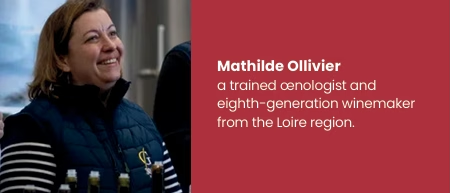
The global wine industry has faced a challenging period in recent years. The COVID-19 pandemic, climate change, shifting consumer preferences, and economic uncertainties have all contributed to an overall decline in sales and production. Some regions, however, have been lucky enough to buck the trend, showcasing resilience and growth. One of these regions is the Loire Valley in France. Sales figures, both in France and abroad, show that Loire wines are particularly popular with consumers. This success demonstrates their ability, in all their diversity, to adapt to the demands of rapidly evolving markets. We spoke to Mathilde Ollivier, a trained œnologist and eighth-generation winemaker from the Loire region. In January 2022, Mathilde took over her family’s estate: a 28-hectare vineyard, planted exclusively with the Melon Blanc grape variety.
What is a Loire Valley wine? Tell us about the terroir.
A Loire Valley wine is a wine produced in the appellation of the Loire Valley region. This region stretches along the river, from its source in Auvergne to the Loire estuary. We are located in the Nantes region, in the heart of the Muscadet Sèvre et Maine appellation.
The market is currently focused on dry white and sparkling wines
The terroirs are very diverse along the Loire River. Within the Muscadet appellation, a true tapestry of soils and subsoils emerges: gabbro, granite, schist, etc. With more than a dozen distinct soil types, the region is remarkably diverse.
What are the specific characteristics of these wines?
The defining characteristics of Muscadet wines, and Loire white wines in general, are their balance: freshness, minerality, aromatic complexity, relatively low alcohol levels (12-13%), and their ability to express the diversity of their terroirs.
How do Loire Valley wines meet current consumer expectations?
Loire wines meet consumer expectations for several reasons. Firstly, the market is currently focused on dry white and sparkling wines, and the Loire Valley is rich in these products. Secondly, the alcohol levels remain naturally moderate, and finally, the wines’ freshness and minerality give them balance.
We are seeing growth in wine production in the north of France and even in the south of England. Is this also the case in the Loire region?
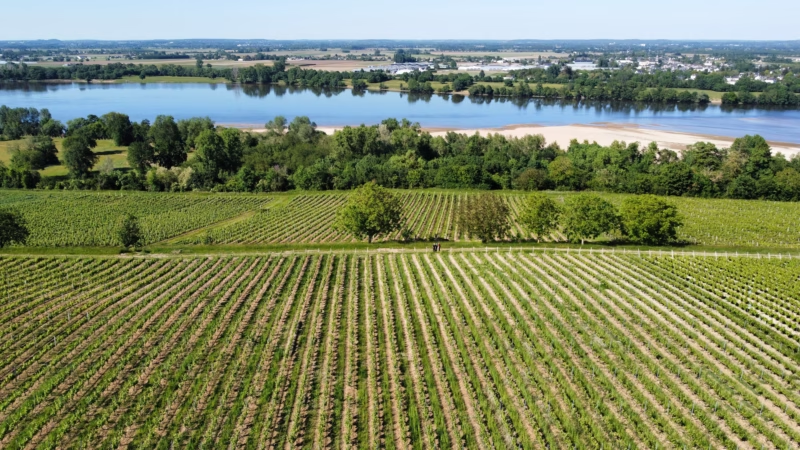
In the Loire Valley, wine production has a long and well-established history, but we are indeed seeing a resurgence of vineyards in areas that were previously underutilized or no longer cultivated. This is the case, for example, along the coast near Guérande, but also in Brittany, whether in the Rance Valley or in Finistère.
Where are Loire wines sold?
Loire wines are sold both in France and abroad, with all distribution channels covered. Exports are clearly the driving force at the moment. In 2024, Loire wines reached a new milestone internationally: 400,000 hectoliters exported (approximately 55 million bottles) and €200 million in export revenue (a record since 2000).
- Loire wines saw a 5% increase in volume and a 5.9% increase in value compared to 2023, while overall French wine exports remained relatively stable.
- 22% of Loire Valley wines are exported.
- The five key markets by volume: Germany (22%), USA (16%), Belgium (14%), UK (13%), Canada (7%).
- By value, 70% is concentrated in: USA (21%), Germany (18%), UK (13%), Belgium (10%), Canada (8%).
In France, consumption remains under pressure, especially in supermarkets. The projected decline in wine sales volume reflects the growing consumer trends towards moderation and low-alcohol alternatives. Though the overall market is turbulent, there are some positive signs. In supermarkets, for example, Crémant de Loire sales increased by 13% in 2024 (volume).
Alcoholic beverages are generally experiencing a decline in consumption globally. In your opinion, how should winemakers adapt?
Regarding the development of no- and low-alcohol wines, I think it’s a very topical issue. You only have to look at the major wine producers to realize that. For our part, we decided in 2023 to focus on making our wines less conventional to respond to a market and consumers seeking quality alternatives. We now have two 100% dealcoholized wines, both made from 100% Melon Blanc grapes, one still and one sparkling. These wines currently represent 15% of our annual sales volume. 60% of them are exported, and 40% are sold in France.
What advice would you give to wine- makers in these uncertain times?
Every case is unique, but generally, we need to listen closely to a range of parameters: climate change, regulatory changes, changes in consumption patterns, geopolitical situations, and in all of this, find the right production and sales channels to develop our vineyards, our wines, our appellations and our industry.