


Lowering SO2 in Your Wine is Getting Easier with our New Bioprotection Solution
As a wine consumer, if you are looking for qualitative low-to-no-sulfite wines, you know it can be challenging. As a winemaker, if you are trying to craft wines with lower levels of sulfites, you know it is difficult to achieve. It requires a deep understanding of your processes, a solid knowledge of the science behind sulfites mechanisms of action, and continued efforts at all stages of your wine’s life cycle.
The reasons why you are working on a low(er) SO2 winemaking program can be very diverse and multiple. You may be producing organic wines or simply trying to follow regulatory limits. You may be targeting to reduce the allergens in your wines or trying to use fewer chemicals in general. You may be worried about the negative effect that SO2 can have on your wines’ organoleptic qualities, or you are simply targeting to follow the overall health trend. In any case, Fermentis has solutions for you.
Anne Flesch, Technical Sales Support Manager for Fermentis in the Americas, says, “For those seeking a low SO2 regimen, we recommend employing a multi-targeted approach using microbiological, chemical, and/or physical alternatives to replace its functions. Focusing and harnessing the power of yeast and yeast derivatives is a good first step to take.”
Understand the value of SO2 and the great potential of alternatives
In the must, SO2 helps prevent the onset of undesirable fermentations, such as those from acetic acid bacteria, and inhibits oxidative enzymes like grape tyrosinases and laccases. In the finished wine, it protects against bacterial and Brettanomyces spoilage. It also guards against oxidation during winemaking operations and helps prevent off-flavors and color degradation. For these reasons, lowering SO2 risks losing its antimicrobial, antioxidant, and oxidase-inhibiting properties and requires far greater stringency by the winemaking team. Anne Flesch notes that “it’s very easy to go overboard with SO2 as a safeguard of your operations, but high levels can result in less fruity wines, a bitter or burning taste, or even a matchstick odor”, all characteristics that can be apparent to consumers.

“Carefully managing your fermentations should be a big part of your low SO2 winemaking program”
In December 2025, we launched SafŒno™ Bioprotect MP-72, a non-Saccharomyces yeast strain. A Metschnikowia pulcherrima, this product is a great bioprotection tool for your must. It has the ability to colonize the must during prefermentative phases, reducing the growth of non-desirable yeast and reducing the need for SO2 at this stage. It can be used in white or rose musts from short clarification to longer pre-fermentation practices such as stabulation for up to 5 days at ~10°C /50°F or 10 days at ~4°C /40°F. It can also be used in red winemaking during cold soak.
“As soon as you inoculate with your chosen commercial Saccharomyces cerevisiae, it will quickly take over for the alcoholic fermentation,” adds Flesch. The additional value is that it can increase the aromatic profile and volume of your wines, while keeping its analytical profile without fault and lower in sulfites. ”
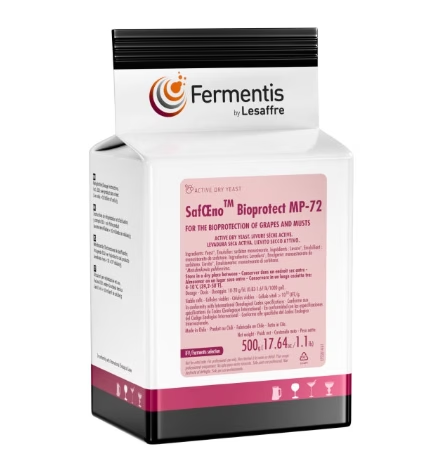
SafŒno™ Bioprotect MP-72
Other Fermentis products that help craft low sulfite wines include a selection of low SO2 producing SafOeno™ yeasts and yeast-derived nutrients, such as SpringFerm™ Xtrem and SpringFerm™ Equilibre, which is rich in thiamine (a vitamin proven to reduce SO2 production during fermentation). “Carefully managing your fermentations should be a big part of your low SO2 winemaking program,” says Flesch.
Other yeast-derived tools include SpringArom™, an inactivated yeast rich in glutathione (a natural antioxidant molecule). It can be used before and until the end of fermentation in whites and rosés. There are also yeast derivatives that mimic aging on lees and limit the microbial risks associated with such practices, such as SpringCell™ Color G2 to be used just before yeast inoculation or SpringCell™ Manno for use at the end of fermentation or the beginning of aging.
For more information and recommendations, reach out to your local Fermentis sales team member or contact us via our contact form.